

Who is Tamara Kidd?
Since 2007 I have worked as an Education Consultant. Specialised in assisting families who Home Educate, I’ve also presented at numerous conferences and workshops. I’ve talked about what Montessori eduction looks like in the home, how to register in every state and territory, in Australia, how homeschooling differs around the world, the history of our current education system, how to record learning especially if you’re unschooling, and how to meet the learning needs of your child. The topics vary, but all help children to be seen and heard. This is the key to helping the young human in your life. For learning about life, gaining skills and knowledge, and supporting them to live their life beyond childhood.
My background
In no particular order, I’ve worked as a Tutor, Primary Teacher, Montessori Assistant, an Educating Parent, Educational Consultant, Sessional Academic, photographer, exhibiting artist and administration assistant online and on the shop floor, and in retail with customer support. When you work retail, especially around Christmas, you get a good taste of how patient you can be. I took photos of Santa for a popular retail chain, twice. I’ve helped thousands of parents tackle the most challenging time of their lives. I have helped children to be heard and seen by their own parents, when frequently those parents are having the childhood trauma triggered. I’ve seen a lot, learnt a lot and have had the very good fortune to have met many wonderful humans.
I’ve been passionate about helping humans all of my life. This has primarily been in the field of education, but not solely. Whether in public mainstream schools, Montessori Children’s Houses, schools that use William Glasser’s Choice Theory, home education (homeschooling or unschooling) or distance education, my understanding professionally was deepened most from the daily grind of home educating my children own children for over 16 years.
My business
Through Tutor Your Own Child, I have helped parents find education solutions when mainstream didn’t work. I also helped those new to home education meet people in their area, get registered and gain confidence. While running this business, and home educating my growing children, I returned to post graduate research in the area of Comparative and International Education, which focuses on the Rights of the Child. Employed by ACU, until Covid layoffs, I completed one of my lifelong goals, to share all I knew with my research field.
What I’m doing now
My now adult children are both at University. As the oldest CoDA of my Australian family, I’m currently the carer of our beloved Aunty. Unfortunately, this work is not compatible with consultations, and so they have ceased. Instead, I’m using this time to fulfil another lifelong goal; to write and illustrate books for children.
Our home educating community has a need for authentic representation in literature. Author Beverley Paine, also known as The Educating Parent, has already published a series of books. I was humbled to Beta read them and they are wonderful! They are available through Always Learning Books.
If you want to follow my writing/illustrating journey, you’ll find me on Substack here.
What is Home Education?
Home Education is parenting 100% all the time, and essentially can be described as not delegating the formal education portion of a child’s development to a school. When you start home educating, you stop co-parenting with a school. The freedom can be liberating, and the weight of responsibility overwhelming. If you don’t know anyone else who has homeschooled, outside of remote learning during lockdowns, you might even feel like Alice falling down a rabbit hole, passing through the looking glass as you go from one world to another. Rest assured, you have a large community to help you to navigate how to do that successfully, and meeting those people is I believe essential.
Do you think you need to purchase a complete education curriculum? Join an association? Belong to a co-op?
You do not.
Have you assumed you’ll need to outlay $100s before you can get started?
PLEASE DO NOT!
Many will tell you that they regret buying a curriculum, materials or a subscription to an online program before working out what their children need and are willing to use. Ask your community how to set yourself up, for free.
Learning about the world, in the world, is very hard to replicate in a school environment.
My professional teaching and personal educating parent perspective
I’m one of many teachers who have moved from working in a school to opting to home educate their own children. When I started home educating in 2006 my local area only had a few people I felt we as a family could relate to. In 2009, I began a meetup group, and now our area in the Hunter Region of NSW is considered a ‘mecca’ for homeschooling. Beyond this, we have travelled. This is when we saw first hand how meeting others makes a difference. Being active only helps too, but the meetups, camps, weekly activities and special events means the most to the children.
Being in a very diverse community of parents, and caregivers, who are choosing this approach to education has been humbling. Home educating my children was the best teaching gig I’ve ever had. It was as a teacher, in that deschooled mindset, that I deeply enjoyed meeting my children’s needs, without the many limitations of school life which I knew about only too well, through CIE.
As a parent, I loved watching my children thrive socially, spending time with a diverse range of people rather than being confined to a classroom with same-age peers they often would not free to collaborate with. I find great joy in seeing children play freely, learning cooperation and collaborating naturally, without constant policing.
What is it actually like?
For the parent/caregiver it is diverse, interesting, challenging, eye-opening. The days are long, but the years are short. You’re not co-parenting with a school. Socially, sometimes you’ll meet people and the only thing you’ll have in common is that you home educate at least one child. Everything else will be a mixed bag. This will make your experience rich and varied socially, for the children and adults. The children tend to help each other more than they would in school.
Children like being with people who are interested in the same things they are interested in. Our children are free to learn to completion, so they often exhaust something and find something else to learn about. In turn, they meet new people based on that new interest. Rather than social cliques, they become a community of learners, all working at their own pace, with a variety of interests and knowledge.
As an adult, you don’t have the competitive or superficial dynamics of the school gate. You have time and opportunity to make deep connections with other parents that can last after your child ‘ages out’. The support can be wonderful, as long as you get out and meet people. We also frequently talk about what interests us, as our children do. I have three home educating parents in my writing group, which has 50 or so active members. I still maintain friendships with scores of others I met through home education.
Final word
I want to add that nobody home educates on a whim. You’re going to be meeting very committed and dedicated parents who genuinely like being with their children, even if they complain when things are temporarily hard.
I want you to know that if you’re still home educating your children, following their learning needs, for 2+ years, you’ve generally found a way to make it work. If you work with your child, your relationships with them are likely to only get better as they reach graduation. There’s a very good chance that your teens will move into work and/or tertiary education without needing to recover from their childhood, or school. They would have avoided the HSC stress too.
However, if the homeschooling/unschooling experience was always your choice and your child resents you for this, I strongly recommend that you reconsider your parenting choices. Eventually, the child will be free to choose, and you might not be who they choose to have in their life once they are an adult. We really do reap what we sow. Rejection of parents post home education is rare, but it does happen.
Respected children become respectful adults. The most common home educating experience is the result of parents/caregivers seeing, hearing and supporting the personal agency of children. Together they co-create their own home education experience. The parents/carers who do not facilitate this, or who neglect their children (referred to as unparenting) really stand out in the community. Ultimately it is your children will be the people who give you your final report card.
Home Education Mentor videos from 2021 to 2024
Want access to my free advice? To date, I have over 50 Mentor Videos for Nurture Parenting Magazine.
I have presented at many events. Fearless Homeschool (paid subscription, currently no affiliation) has my most recent conference talks.
I also presented information for parents navigating Remote Learning during Covid lockdowns, for Jess Arachchi (formerly known as Jessica Mcilveen) at The Global Happy Home Summit. It has been wonderful to see Jess over the years. Her current project, The Happy Home Movement.
I often point people towards Jess, or Stephanie Pinto from Let’s Raise Emotionally Intelligent Kids, when looking for parenting support.
Described as a well written easy read, From Chaos to Connection: How parenting with emotional intelligence raises kind, confident, resilient kids, by Stephanie Pinto, is an excellent for those wanting to get on the same page with their children.
Both Jess and Stephanie have communities online for added support.
If you’re in NSW, the best help for home education registration support, community connections and ideas is available through the Facebook group Home Education NSW.
In QLD, the best help is through the Facebook group Home Education Qld.
If you’re not, then there’s no better place than The Educating Parent.
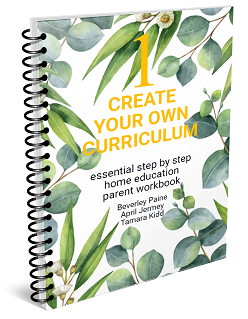
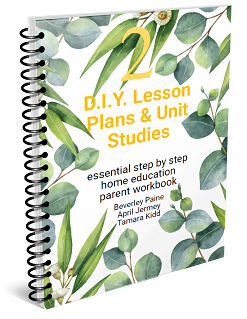
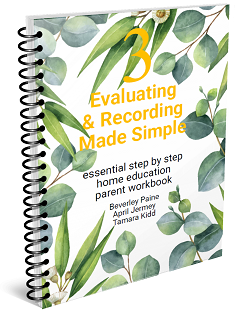
Do you need help developing your own curriculum, plans, unit studies, and comprehensive evaluations and records? You can get that help today with these parent workbooks, created by Beverley Paine, April Jermey, and me.

hi Tamara,
i’ve just found your blog through the educating parent site …
i’ll definitely be hanging around! i’ve got 4 (13 – 6) under our roof!
could you please send me a copy of your document of Proformas for the new NSW syllabus? i’m very interested to see. we’re in Sydney but have a little place near Wyong too.
warm regards,
Claire
Hi there Claire,
I was wondering how your journey is going since I emailed you back?
All the best,
Tamara
Hi Tamara
Just starting the process of homeschooling my 13 year old. I’m wondering if you offer a service that helps me to register and set up a program.
Regards
Jeannie
Hi Jeannie,
How has 2016 been going for you both?
All the best
Tamara
Feel free to post any comment you like.